

Some Wharton Executive MBA (EMBA) students arrive with years of entrepreneurial experience, while others are exploring ventures as a next step. Wherever they are on their journey, Venture Lab serves as a hub, giving Penn students access to mentorship, funding, and a cross-campus network to test ideas, scale ventures, and explore new opportunities. For EMBA students, this means practical, hands-on support that complements their classes and professional experiences.
For Madison Li, WG’26, entrepreneurship has long been central to her identity, with early ventures in 3D printing and consumer electronics. At Wharton, she found Venture Lab to be the connective tissue between classroom frameworks and real-world execution.
“Venture Lab has been the cornerstone of my entrepreneurial evolution. It’s where ideas get pressure-tested and pushed to a higher level,” she says.
Exploring Paths
Venture Lab is built around the idea that there is no single path to entrepreneurship. Under the leadership of Vice Dean of Entrepreneurship Lori Rosenkopf, it offers pathway-based support tailored to different goals:
- Explorer Pathway for those curious about entrepreneurship
- Founder Pathway for students building or scaling ventures
- Joiner Pathway for those seeking to join startups
- Investor Pathway for students interested in funding and acquisition
“Entrepreneurship at Wharton is about value creation through innovation,” says Vice Dean Rosenkopf. “Our goal is to help students develop an entrepreneurial mindset: seeing opportunities before others, assessing viability, and learning how to scale.”
She notes that this approach resonates strongly with EMBA students, who bring deep industry and leadership experience and often want to apply entrepreneurial skills in new ways.
“Execution is usually the limiting factor,” says Dr. Nitin Agarwal, MD, WG’26, who is using Venture Lab resources to launch Novuosis Scientific. “Venture Lab fills that gap by giving you access to experienced advisors, structured feedback, and funding opportunities. It helps turn ideas into executable ventures.”
Open Access Across Campuses and Cohorts
All Venture Lab resources are open to EMBA students across the East, West, and Global cohorts. While in-person programming takes place on the Philadelphia and San Francisco campuses, virtual office hours and select online programming make participation possible from anywhere.
For students not located in Philadelphia, Venture Lab is inclusive, says Madison, who is based in Los Angeles. She points to Scale School, hosted in partnership with Lifelong Learning in San Francisco, as a key resource for founders transitioning from startup to enterprise. “Being able to attend in person or access sessions on demand ensures that learning never stops.”
Madison also joined the VIP-X San Francisco accelerator (VIPX-SF), a competitive program open to both students and alumni that provides stipends, mentorship, and hands-on venture development. “VIP-X brings together faculty, alumni, and founders in a deeply collaborative environment. It’s a uniquely impactful extension of the Wharton experience,” she says.
Finding Co-Founders, Testing Ideas, and Building Momentum
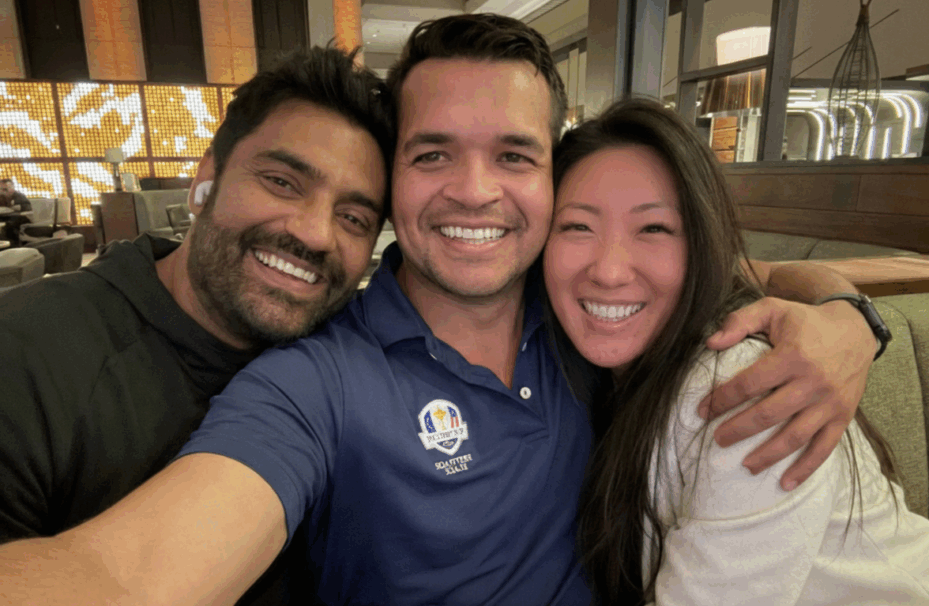
Venture Lab plays a critical role in helping EMBA students find collaborators and refine ideas. Madison met her co-founder, Kenny Sandhu, WG’26, during her first term in the San Francisco cohort. Conversations with classmates sparked the idea behind Koursair, a venture focused on intentional, regenerative travel. A third co-founder, full-time MBA student James Camaliche, WG’25, joined after meeting through Vice Dean Rosenkopf’s Tech in the Bay Area Block Week course.
Frameworks from Wharton courses inform how the team evaluates scalability, constraints, and alignment. “We now apply frameworks from Prof. Gad Allon’s Scaling Operations class to evaluate our venture through the lenses of scalability, constraints, alignment, leadership, and efficiency,” says Madison.
For Nitin, Venture Lab’s Visiting Experts program has been particularly valuable. “Learning directly from founders, investors, and operators helps you avoid common pitfalls and approach entrepreneurship with more discipline and strategic clarity,” he says.
Funding, Competition, and Real Stakes
Venture Lab also provides tangible resources to help EMBA students move from idea to action: coaching, startup tools, and access to funding.
Nitin’s venture, Novuosis Scientific, received a Penn Wharton Innovation Fund award and was named a 2025 Startup Challenge finalist. Madison’s team is participating in the 2026 Startup Challenge.
“The Startup Challenge is the ultimate proving ground,” she says. “It’s a pivotal moment where remote and on-campus students alike can gain visibility, feedback, and funding to bring ideas to life.”
Students interested in investing or acquisition can pursue Entrepreneurship Through Acquisition (ETA) programming, which includes specialized training, webinars, and incubator support. “ETA is a powerful option for experienced professionals,” Nitin notes. “It offers a different but equally entrepreneurial path to leadership and value creation.”
A Cross-Campus, Lifelong Community
One of Venture Lab’s defining strengths is its interdisciplinary reach. EMBA students collaborate with peers across Penn and remain connected to alumni who serve as mentors, speakers, and collaborators. Select programs, such as Scale School and the San Francisco accelerator, are also open to alumni, reinforcing Venture Lab’s role as a lifelong entrepreneurial community.
“The value is unparalleled,” says Nitin. “Having a dedicated hub with real financial and advisory resources and meaningful access for EMBA students is rare.”
What Prospective EMBA Students Should Know
“Interest in entrepreneurship among EMBA students continues to grow as more use the program to explore what’s next,” says Vice Dean Rosenkopf. “Venture Lab complements the EMBA curriculum by offering experiential learning and access to an extraordinary network.”
“The key is engagement,” she adds. “Venture Lab is here to support students. We encourage anyone interested to explore and take advantage of the many resources and opportunities.”
By Meghan Laska
Posted: February 2, 2026